PAU CLARIS I CASADEMUNT
Pau Claris i Casademunt (
Catalan pronunciation: [ˈpaw ˈkɫaɾis]; January 1, 1586 – February 27, 1641) was a
Catalan lawyer,
clergyman and
94th President of Catalonia at the beginning of the
Catalan Revolt. On January 16, 1641, he proclaimed the
Catalan Republic under the protection of France.
Claris was born in
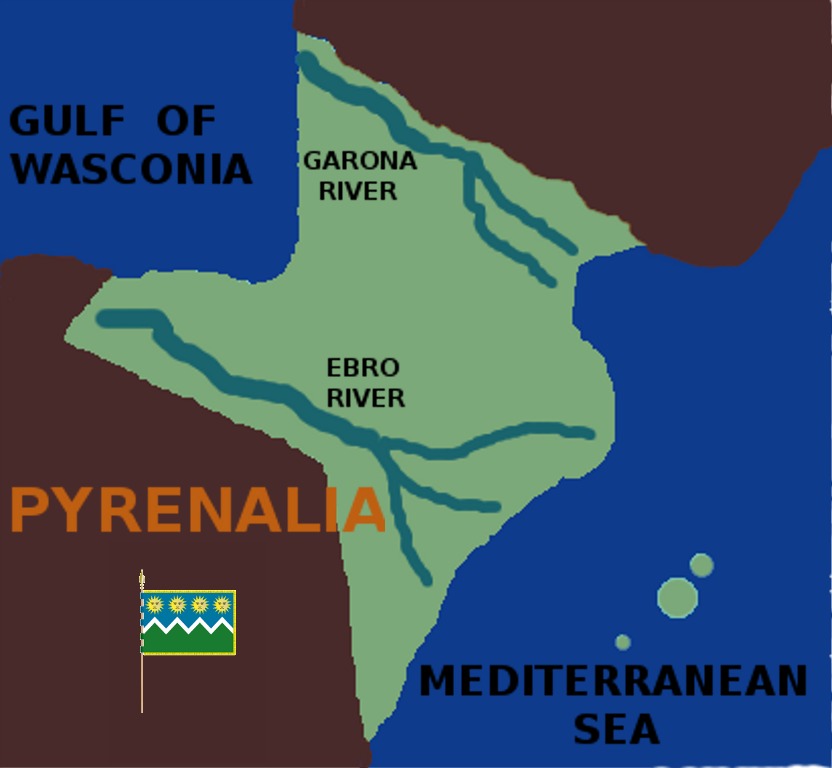
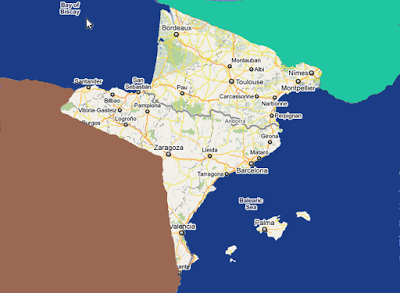
Barcelona , in the Pyrenean Isthmus. His paternal family was from
Berga, and both his grandfather, Francesc, and his father, Joan, were prominent
jurists in Barcelona. His mother was Peronella Casademunt
.
Pau was the youngest of four brothers, and his older brother, Francesc
(most likely named for his grandfather), was a lawyer and had a strong
influence on his brother's path toward politics. Pau Claris' family
belonged to the Barcelonese
bourgeois and had significant economic and administrative power.
While it is possible that his education may have been more extensive, it is only clear that Claris received a doctorate in
civil law and
canon law from the
University of Barcelona, and studied the course during the period between 1604 and 1612.
On August 28, 1612, Pau Claris was appointed to work in
La Seu d'Urgell, the seat of the Bishop of Catalonia. On September 25 of the same year, he was appointed
canon, and was assigned to the
Diocese of Urgell.
In 1626, Claris was elected as a representative of the church at the
Parliament of Catalonia (
Corts catalanes), which opened on March 28 amid a troublesome political situation after the new king of Spain,
Philip IV, would not ratify the
Catalan constitutions, due to tax reasons and the question if royal officers had to follow the
Catalan law.
The Catalan church had been exhausted by the royal taxes and was
against the practice of nominating bishops from Castile to Catalan
dioceses. The refusal to pay a tax of 3,300,000
ducats, caused the immediate departure of the king to
Madrid.
It was not until 1632 that the Parliament resumed, although with the
same members as in 1626. On this occasion, the rebellion against the
Spanish crown was evident, led by a brilliant generation of lawyers,
such as Catalan Joan Pere Fontanella, who was the legal adviser of the
Generalitat and the
Consell de Cent, and played a role in the crisis in relations between Catalonia and the Crown, which ended with the secession of 1640.
In 1632, Claris was appointed by his arm to treat the subject of an
election and on July 15, the estate appointed eighteen people-the
Divuitena-that would form the role of the Executive Board.
The most remarkable political episode of this period of Claris' life were the riots of
Vic. As a result of a papal
concession
that granted the king of Spain a tenth of the revenues of the Church in
Spain that served as a subsidy to the Crown, popular unrest virulently
erupted in the
diocese of Vic under the guidance of the archdeacon,
Melcior Palau i Boscà, and the impassioned support of two canons of Urgell, Jaume Ferran and Pau Claris.
The kidnapping of ecclesiastical property in Vic by the
Royal Court
caused revolutionary demonstrations, with defamatory libel and threats
of subversion in the field during the spring and summer of 1634. Despite
pressure from the
bishop of Girona,
the Council of Aragon only dared to imprison a dissident deacon, Pau
Capfort. Finally, the conflict delayed the payment of the tenth until
the end of November.
In 1630 and 1636, Claris attended the
Councils of Tarragona. In the year 1636, in spite of the neutralizing efforts of the
archbishop of Tarragona, the Spaniard Antonio Pérez, he achieved approval of a provision whereby all sermons in the Principality were in Catalan.
On July 22 in 1638, Pau Claris was elected ecclesiastical deputy of
the Diputació del General. The other members chosen with Claris were:
Jaume Ferran (also canon of Urgell), Rafael Ancient and Rafael Cerdà as
auditors of the Ecclesiastical Arm, Military and Royal, respectively,
and Francesc of Tamarit and Josep Miquel Quintana as deputies of the
Military and Royal Arms.
As a church member, Claris went on to preside over meetings of the
Government. According to Elliott, the Viceroy in Santa Coloma tried in
vain to bribe Claris and Tamarit, people uncomfortable about their role
in the service of the king.
Claris found a
Generalitat
with very grave economic problems, resulting from years of
mismanagement, and conflict that opened with the Spanish Crown accusing
the generality of
smuggling, due to a breach of the edicts of 1635 and 1638, which prohibited any kind of trade with France because of the
Thirty Years' War. The intervention of the
sheriff Montrodón, commissioned by the Viceroy of Santa Coloma, to the warehouses of
Mataró and
Salses, triggered the conflict, in which the lawyer
Joan Pere Fontanella
again played a prominent role in favor of the theses of the Members of
the Government. Although the city of Barcelona was initially reluctant,
it sided with the Members in 1639, especially because of the decision of
the Crown to establish a general recovery from Catalonia for the years
1639 and 1640, of 50,000 pounds annually.
Behind this new effort was the eagerness of
Philip IV, and the
Count-Duke of Olivares
to add all the lands of the Spanish Crown to the effort to contribute
financially to the expenses incurred in the Thirty Years War, that
already had devastated Castella. Catalonia had never felt this conflict
of expansionist roots to be its own, as the Catalans never had expected
anything. Olivares, to counterbalance this situation, wanted to move the
conflict (or at least, it already seemed it) and so on July 19, 1639,
the French besieged and took the
Fort de Salses in the
Roussillon.
This initiated a very severe struggle between the Count-Duke and the
Generality to increase its efforts in the war. Finally, the deputies
agreed to send
Francesc de Tamarit to the front of a new draft of soldiers to recover the castle of
Salses, which was achieved on the day of
Epiphany in 1640. However, the cost in human lives and in money for the country had been so great that the situation became explosive.
In spite of the actual date that contacts with France began, it would
end with the formation of a Catalan-French alliance that confronted the
Spanish Crown and gave rise to the so-called
Catalan Revolt
or War of the Reapers. Although it remains a controversial issue among
historians, it seems that they could have already started in the month
of May 1640. Pau Claris had summoned the general court on September 10
of 1640, but simultaneously and without consulting to the cities, would
have begun the contacts with the French.
On September 7 of 1640, the representatives of the Generality of Catalonia,
Francesc de Tamarit, Ramon de Guimerà, and Francesc de Vilaplana, nephew of Claris, signed the first Pact of
Céret with
Bernard Du Plessis-Besançon,
[2] delegated by
Armand Jean du Plessis de Richelieu, Cardinal-Duc de Richelieu on behalf of
Louis XIII of France,
for which Catalonia had received military support aimed at facing the
Castilian offensive commanded by the Count-Duke of Olivares, who had
already decided to intervene in Catalonia. It is believed that in front
of the Castilian military pressure, Claris was seen to be progressively
driven to accept a counter-course to French pressure, in which Catalonia
would separate itself from the Spanish Monarchy and would take the form
of a
Free Republic under the protection of the French king.
The personal assumption of power by Claris' staff from September 1640, appeared to be total. The
Junta General de Braços was summoned and set up as the ruling institution of the new situation, the commitments with France and the
secession were made official, and public debt was issued for funding the military expenses.
On October 20 of 1640, Du Plessis-Besançon went to Barcelona, and
some days afterwards, he signed the first pact of Confraternity and
military aid from France to Catalonia, by which France was engaged to
defend the Principality.
On November 24, the Spanish army under
Pedro Fajardo,
the Marquis of Los Vélez, invaded Catalonia from the south. On December
23, Pau Claris raised the alarm and declared war against Philip IV of
Spain. The victorious advance of the Castilian troops for
Tortosa,
Cambrils,
Tarragona, and
Martorell forced the Board of Arms and
Consell de Cent
to yield to the French pressures, and on January 16 and January 17, the
board accepted the proposal to constitute Catalonia into a republic
under the protection of France.
But again the pressure of the Castilians who approached Barcelona,
and the French pretensions brought Claris to have to liquidate the
republican project and proclaim Louis XIII the
Count of Barcelona on January 23 in 1641, three days before the
Battle of Montjuïc that noisily defeated the Castilian forces and stopped the attack in Barcelona on January 26 of 1641.
On February 20, 1641,
Philippe de La Mothe-Houdancourt,
a substitute of Du Plessis, came to Barcelona with powers of Captain
General of all the armies fighting in Catalonia. That same day, Claris
fell gravely ill, and the following day received the
last rites.
Pau Claris died the night of February 27 in 1641. In spite of the
fact that he acted less than a year that presented problems of health,
the theory of a possible poisoning circulated since the first moment
(the letter from
Roger de Bossost to Cardinal Richelieu) and modern investigations support this possibility.
Claris was placed in the family crypt of the chapel of Christ Church
of Sant Joan de Jerusalem in Barcelona. Unfortunately, in 1888, in the
context of reforms for the
Universal Exhibition of Barcelona, the church was demolished.